October 5, 2026
Cyber Security Awareness Month: five basics that work
Five simple security controls every business should have in place, from MFA everywhere to a verification process that stops payment fraud.
Read MoreMarch 2, 2026
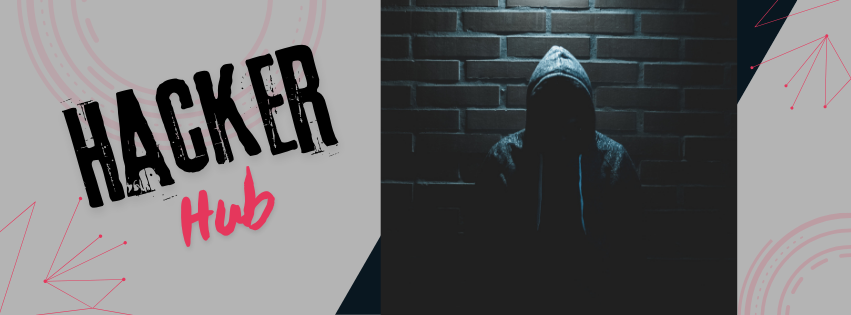
When most people hear the word hacker, they imagine someone in a dark hoodie typing furiously in a dimly lit room.
Hollywood has a lot to answer for.
In reality, hacker culture is far older, far more creative, and far more nuanced than most people realise. The term didn’t start with cybercrime. It started with curiosity.
Here are seven fascinating, and factually accurate, pieces of hacker history you probably didn’t know.
The word hacker originated at MIT in the late 1950s.
But it had nothing to do with cybersecurity.
Members of the Tech Model Railroad Club (TMRC) used the term “hack” to describe clever, innovative, and sometimes playful technical modifications to their elaborate train control systems. A “hack” was a smart solution, often built for fun rather than necessity.
When computing began to take off at MIT, many of these same students moved from model trains to mainframes. The culture followed them.
Originally, a hacker was:
Malicious intent wasn’t part of the definition. That came much later.
This one is famous, and mostly accurate.
In 1947, engineers working on the Harvard Mark II computer discovered a fault. The cause? A moth trapped inside a relay.
The moth was taped into the logbook with the note:
“First actual case of bug being found.”
Now, here’s the nuance:
The term “bug” already existed in engineering before this incident. It had been used to describe mechanical faults for decades (even Thomas Edison used the term).
So the moth wasn’t the origin of the word, but it was the first recorded literal computer bug.
And yes, that logbook still exists at the Smithsonian.
Ethical hackers are called white hats. Criminal hackers are called black hats.
That terminology comes from old Western films.
In classic Hollywood Westerns:
Simple visual shorthand for good versus bad.
Cybersecurity adopted the same language:
It’s a surprisingly cinematic origin for an industry built on code.
One of the earliest known self-replicating programs was called Creeper, created in 1971 by Bob Thomas at BBN Technologies.
It ran on ARPANET (the precursor to the modern internet) and displayed the message:
“I’m the creeper: catch me if you can.”
It wasn’t destructive. It was experimental, designed to demonstrate that a program could move between machines.
Shortly afterwards, another program called Reaper was created to remove Creeper.
Reaper is widely considered the first antivirus software.
So yes, the first virus wasn’t criminal. And the first antivirus followed almost immediately.
Cyber security began as experimentation, not warfare.
You’ll often hear the claim that “many hackers became billionaires.”
There’s truth here, but context matters.
The original hacker culture celebrated curiosity, deep technical understanding, and pushing systems to their limits. Many early Silicon Valley founders shared this mindset.
People like:
They weren’t cybercriminals, but they embodied early hacker ethos: explore, modify, build, improve.
The line between “hacker” and “innovator” has often been intent and legality.
Hacker culture has always had two paths:
Same technical skill. Very different outcomes.
DEF CON, one of the largest hacking conferences in the world (held annually in Las Vegas since 1993), runs a “Voting Village.”
Security researchers are invited to examine decommissioned or legally supplied voting machines to identify vulnerabilities.
The purpose is not to undermine elections.
The goal is to:
And yes, vulnerabilities have been found repeatedly.
The takeaway isn’t “democracy is broken.”
The takeaway is: transparency improves security.
Security through obscurity doesn’t work. Independent testing does.
Here’s the uncomfortable truth:
Some of the most devastating breaches in history didn’t start with zero-day exploits.
They started with a human.
Social engineering, manipulating people rather than breaking code, remains one of the most effective attack vectors.
Examples include:
In many major breaches, the weakest link wasn’t encryption.
It was trust.
That’s not a criticism of people. It’s reality. Humans are wired to be helpful and responsive.
And attackers exploit that.
The strongest hackers aren’t always the best coders.
They’re the best psychologists.
“Hacker” didn’t start as a dirty word.
It started with curiosity.
Over time, the narrative shifted toward criminality, but the core mindset of hacking is still about understanding systems deeply enough to improve them.
The problem isn’t hacking.
The problem is intent.
And in cybersecurity, intent is everything.

October 5, 2026
Five simple security controls every business should have in place, from MFA everywhere to a verification process that stops payment fraud.
Read More
October 2, 2026
A single phone call to an IT help desk cost TfL a reported £29 million. Here's how help desk impersonation works and how to stop it.
Read More
August 24, 2026
AI has made phishing emails harder to spot by sight. Here's what's changed, and the checks that still work.
Read More